
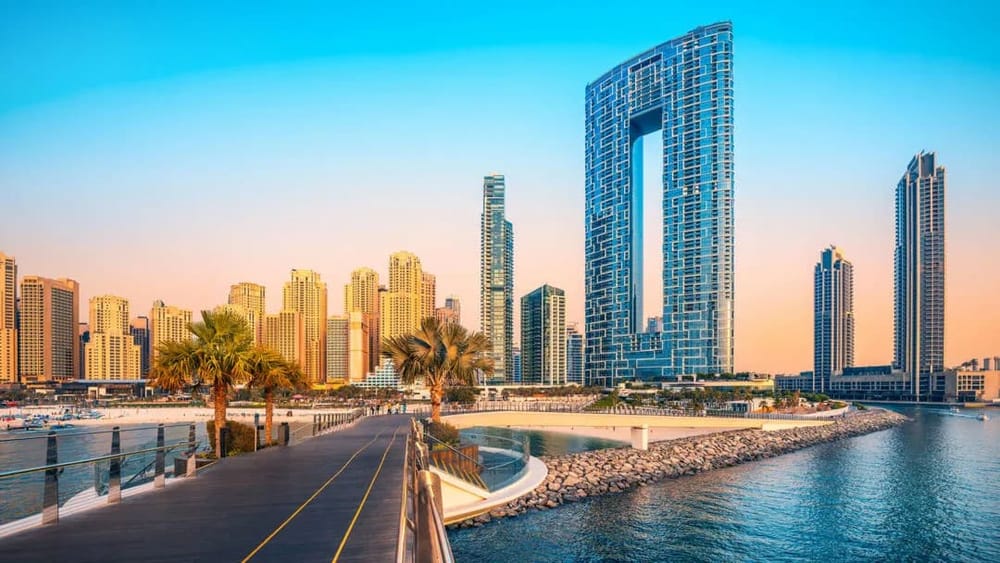
Dubai in 2026 is Different: 12 Things That Feel Almost Illegal to Experience
If you visited Dubai in 2021, as I did, you most likely saw a country in rebound mode. Borders had reopened earlier than most global hubs. Hotels were running at strong occupancy compared to Europe and Asia, and recovery hopes for a battered tourism sector were quite palpable.
Five years down the line, I almost couldn't believe my eyes. Yeah, dining is still theatrical, and beach clubs are more immersive, but much more than these, the air felt different. The policy change that has seen Entrepreneurs, tech founders, remote workers, investors, and high-net-worth individuals relocate in significant numbers is likely the main cause, as long-term residency programs like the Golden Visa reshaped who stays — and for how long.
Here are 7 things to do in Dubai that feel almost illegal.
1. Dine 50 Meters in the Sky with Dinner in the Sky
Dining on a rooftop is a big deal. However, imagine being strapped into a racing-style seat, having a harness click across your shoulders, and being lifted 50 meters above the ground by a crane. No walls. No floor beneath your feet. Just skyline, open air, and a multi-course meal served with unnerving calm.
When I experienced it in the company of some friends, I was asked to say the Lord's prayer. To be honest, it felt like I was saying my last prayer. I couldn't really eat. Just spent most of the time rethinking the life choices that got me up there.
But ask me if I would love to experience it one more time? The answer is a resounding Yes!!

The table seats around 22 guests at a time, with chefs and staff secured in the center as they plate and serve mid-air. Below you, the city hums. Around you, nothing but glass towers and sky. If you’re lucky, you’ll catch the light changing over the skyline as sunset turns steel into gold.
It feels excessive. It feels slightly ridiculous. And yet, in modern Dubai, it feels completely on-brand.
2. Swim in the World’s Deepest Pool at Deep Dive Dubai
When I say “world’s deepest pool,” I don’t mean a fancy hotel infinity edge. I mean 60 meters deep. That’s deeper than a 20-storey building is tall.
Deep Dive Dubai earned a Guinness World Record for that depth, holding roughly 14 million liters of fresh water — temperature controlled at about 30°C so you’re not shivering your way through it. It isn’t just a vertical shaft either. Inside is a deliberately built underwater structure designed to resemble a sunken city, with rooms, corridors, and objects divers can move through.

And if you can’t swim? You’re not excluded.
First-timers book guided introductory dives. You’re in full scuba gear, attached to a certified instructor the entire time, and you remain in controlled, shallow sections. You’re not free-swimming laps; you’re breathing through a regulator while someone manages your position and ascent.
3. Rent a Supercar for the Day and Own the Skyline
In most cities, a Lamborghini turning the corner makes people stop and stare. In Dubai, it barely interrupts traffic. That shift alone says a lot about how the city has evolved.
Over the past five years, as long-term residency reforms attracted founders, crypto investors, finance executives, and high-net-worth relocators, the supercar scene stopped feeling performative and started feeling normal. Ferraris idle at valet stands. McLaren's line up outside beach clubs. Rolls-Royces sit in supermarket parking lots.
Renting one for the day isn’t about pretending to be something you’re not. It’s about temporarily plugging into the rhythm of the city. You pick it up, ease onto Sheikh Zayed Road, and suddenly the skyline feels different — closer, sharper, more cinematic. Glass towers reflect off polished carbon fiber. The road infrastructure is built for speed and spectacle.
4. Book a Private Yacht Through Xclusive Yachts
Five years ago, chartering a yacht in Dubai sounded like something reserved for oil heirs and visiting celebrities.
Now, it’s strangely accessible.
Companies like Xclusive Yachts operate one of the largest private charter fleets in the region, running out of Dubai Marina. What changed isn’t just supply — it’s scale. As post-2021 capital flowed into the city and tourism rebounded hard, marine leisure expanded with it. More boats. More routes. More mid-tier charter options alongside the ultra-luxury ones.

You board from a manicured marina, cruise past the skyline, circle Palm Jumeirah, and cut across open water with the Burj Al Arab in the distance. The perspective is the point. Dubai was built vertically, but it was designed to be viewed horizontally — from the sea.
The numbers tell the story. Dubai’s tourism sector has returned to double-digit millions in annual visitors, and maritime leisure has grown in parallel, with private charters becoming a normalized group activity rather than a rare splurge.
5. Skydive Directly Over Palm Jumeirah with Skydive Dubai
There are scenic skydives, and then there’s this.
You take off from a drop zone carved into the edge of Dubai Marina, climb to roughly 13,000 feet, and when the door opens, the geometry of Dubai is laid out beneath you. The Palm isn’t an abstract idea from a brochure — it’s a perfectly engineered archipelago shaped like a palm tree, visible in full symmetry from the air.
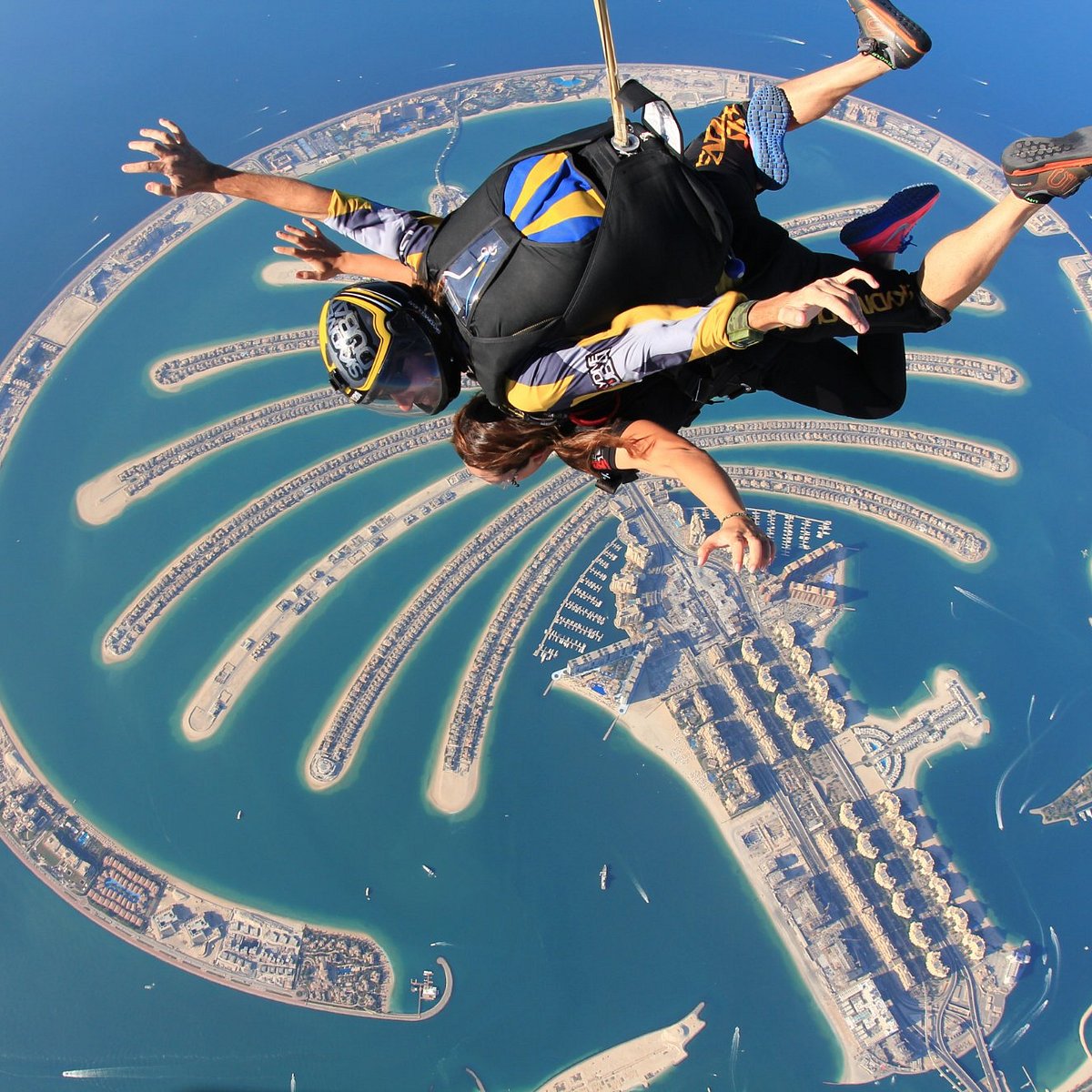
The freefall lasts close to 60 seconds, reaching speeds of around 190–200 km/h before the parachute deploys. From there, it’s controlled descent over one of the most recognizable artificial islands on the planet.
What’s striking now, compared to 2021, is how polished the entire operation feels. High-frequency jump schedules. Professional tandem instructors. Streamlined booking systems catering to a steady influx of residents and long-term visa holders, not just short-stay tourists.
Skydiving here isn’t framed as extreme rebellion. It’s framed as premium lifestyle.
6. Check Into an Underwater Suite at Atlantis The Palm
The underwater suites at Atlantis The Palm aren’t gimmicks added for social media. They’re multi-level accommodations where the bedroom and bathroom look directly into the Ambassador Lagoon — a massive aquarium built into the core of the resort. Floor-to-ceiling glass replaces traditional walls. Stingrays, sharks, and schools of fish drift past while you’re brushing your teeth.

Atlantis opened in 2008, but what’s changed is how this level of spectacle now fits into Dubai’s broader identity. Post-2021, ultra-luxury hospitality expanded aggressively across Palm Jumeirah. Record tourism rebounds, rising high-net-worth migration, and sustained hotel occupancy rates reinforced demand for experiential stays rather than just five-star rooms.
The suites themselves are designed less like hotel rooms and more like private viewing galleries. Separate lounge areas upstairs. Submerged sleeping quarters below. Dedicated butler service. It’s immersive by design, not by accident.
7. Experience Ultra-Luxe Desert Glamping with Al Maha Desert Resort & Spa
Al Maha Desert Resort & Spa sits inside the Dubai Desert Conservation Reserve, a protected area where development is tightly controlled and wildlife is actively preserved. This isn’t dune bashing and tour buses. It’s 42 standalone villas spread across open desert, each with a private temperature-controlled pool facing nothing but sand.
Arabian oryx and gazelles roam freely across the reserve. There are no neighboring high-rises, no beach clubs, no skyline glow at night — just silence and wind moving across dunes.

What feels different now is how sharply this contrasts with the version of Dubai that exploded post-2021. As wealth, migration, and vertical growth intensified, the value of curated isolation rose with it. High-end desert stays became less about novelty and more about controlled retreat.
Al Maha operates on an all-inclusive model — meals, selected activities, guided desert drives — reinforcing the idea that you’re stepping into a self-contained environment rather than a hotel.
Conclusion
Five years is a short time in most cities. In Dubai, it’s enough to redraw the skyline, reshape residency laws, rebalance entire industries, and normalize levels of access that once felt reserved for a different tax bracket. What stood out most on this return wasn’t just the new openings or the bigger numbers — it was the confidence. Experiences that might feel excessive elsewhere are simply integrated into daily life here. Underwater suites, sky dining, supercars, private yachts — they don’t feel like stunts. They feel infrastructural.
Dubai in 2026 isn’t trying to prove itself anymore. It’s refining scale. It’s layering engineered experiences onto extreme geography and calling it standard. If you last visited in 2021, you saw a city rebounding. What you’ll see now is a city operating at full velocity — one where the line between spectacle and normalcy has blurred so much that some experiences genuinely feel like they shouldn’t be allowed. And yet, here, they are.
You can book your perfect vacation rental in Dubai with Karta!
Best Places to Eat in Dubai
| # | Place | Address | Most Popular Meal | Average Price (Per Person) |
|---|---|---|---|---|
| 1 | Pierchic | Al Qasr, Madinat Jumeirah, Dubai | Grilled Lobster with Lemon Butter | AED 500–700 |
| 2 | Zuma | DIFC, Gate Village 06, Dubai | Miso-Marinated Black Cod | AED 400–600 |
| 3 | Ossiano | Atlantis The Palm, Palm Jumeirah, Dubai | Multi-Course Seafood Tasting Menu | AED 800–1,200 |
| 4 | Trèsind Studio | St. Regis Gardens, Palm Jumeirah, Dubai | Modern Indian Tasting Menu | AED 800–1,000 |
| 5 | Al Fanar Restaurant | Festival City Mall, Dubai | Machboos (Emirati Spiced Rice with Meat) | AED 80–150 |
| 6 | Gaia | DIFC, Gate Village 04, Dubai | Sea Bream Carpaccio | AED 350–550 |
| 7 | BB Social Dining | DIFC, Gate Village 08, Dubai | Wagyu Bao Buns | AED 200–350 |
| 8 | Ravi Restaurant | Al Satwa, Dubai | Chicken Biryani | AED 30–60 |
Day Trips From Dubai
| Location | Distance from Dubai | Five Things to Do |
|---|---|---|
| Abu Dhabi | Approx. 140 km (1.5 hours by car) |
1. Visit Sheikh Zayed Grand Mosque 2. Explore Louvre Abu Dhabi 3. Spend a day at Ferrari World 4. Walk along the Corniche 5. Tour Qasr Al Watan Presidential Palace |
| Hatta | Approx. 130 km (1.5 hours by car) |
1. Kayak at Hatta Dam 2. Hike the Hatta Mountain trails 3. Visit Hatta Heritage Village 4. Mountain biking at Hatta Wadi Hub 5. Stay in mountain lodges or glamping domes |
| Sharjah | Approx. 30 km (30–45 minutes by car) |
1. Explore Sharjah Museum of Islamic Civilization 2. Walk through Al Noor Island 3. Visit Sharjah Arts Area 4. Stroll Al Qasba waterfront 5. Shop at Blue Souk |
| Al Ain | Approx. 150 km (1.5–2 hours by car) |
1. Visit Jebel Hafeet mountain 2. Explore Al Ain Oasis (UNESCO site) 3. Relax at Green Mubazzarah hot springs 4. Tour Al Ain Palace Museum 5. Visit Al Ain Zoo |
| Fujairah | Approx. 120 km (1.5 hours by car) |
1. Relax on Fujairah beaches 2. Snorkel or dive in the Gulf of Oman 3. Visit Al Bidya Mosque (UAE’s oldest mosque) 4. Explore Fujairah Fort 5. Take a boat trip or fishing excursion |
Best Time to Visit Dubai
| Season | Months | Temperature Range | What to Expect | Best For |
|---|---|---|---|---|
| Peak Season | November – March | 24–30°C (75–86°F) | Comfortable weather, lively atmosphere, full events calendar, higher hotel and flight prices. | Beach days, desert safaris, outdoor dining, sightseeing. |
| Shoulder Season | April – May & October | 30–38°C (86–100°F) | Warm temperatures, fewer crowds, better hotel rates than peak season. | Value travel, poolside relaxation, shorter outdoor activities. |
| Summer (Low Season) | June – September | 40°C+ (104°F+) | Very hot and humid, lowest hotel prices, focus on indoor attractions and resort stays. | Budget travelers, luxury hotel deals, indoor experiences. |
How to Get Around in Dubai
Dubai is modern, safe, and extremely well connected — but it’s also spread out. Distances between neighborhoods like Downtown, Marina, Palm Jumeirah, and Old Dubai are bigger than they look on a map. Here’s how to move around efficiently.
Dubai Metro
The Metro is clean, air-conditioned, driverless, and reliable.
- Red Line: Airport, Downtown (Burj Khalifa/Dubai Mall), Marina
- Green Line: Deira and older districts
- Trains run frequently
- Requires a Nol card
It’s affordable and avoids traffic, but coverage is limited to main corridors — you’ll often need a taxi for the “last mile.”
Taxis
Dubai taxis are government regulated, metered, and widely available.
- Easy to hail or book
- Generally affordable compared to Western cities
- 24/7 airport service
- Clean and safe
For convenience, taxis are often the simplest option.
Ride-Hailing Apps
Uber and Careem operate citywide.
- App-based booking and payment
- Premium vehicle options
- Slightly more expensive than standard taxis
Renting a Car
Dubai is built for driving. Highways are wide, signage is in English and Arabic, and parking is generally accessible.
If you plan to explore multiple areas daily or visit Abu Dhabi or the desert, renting offers flexibility.
Water Transport
You can cross Dubai Creek by traditional abra for a small fee. There are also water taxis and ferries in the Marina areas.
More scenic than essential — but worth experiencing.
Cultural Tips & Laws in Dubai
Dubai is modern, international, and home to a majority expatriate population — but it operates within the cultural framework of the United Arab Emirates. Most visits are smooth and problem-free, but understanding local expectations makes a big difference.
Here’s what travelers should know:
Dress Code
Dubai is more relaxed than many assume, especially in hotels, beaches, and nightlife venues.
- Swimwear is fine at pools and beaches
- Shorts, dresses, and sleeveless tops are common in tourist areas
- Malls and public buildings prefer modest clothing (covered shoulders and knees recommended)
- Mosques require conservative dress (women cover hair; men wear long trousers)
It’s about context. Dress more conservatively in government buildings and older districts.
Alcohol Rules
Alcohol is legal — but regulated.
- Served in licensed hotels, bars, and clubs
- Not permitted in public spaces
- Drinking in public or being visibly intoxicated outside venues can lead to fines
Tourists do not need a liquor license to drink in licensed venues.
Public Behavior
Dubai is socially open but expects respectful conduct.
- Public displays of affection should be minimal
- Aggressive behavior or public arguments can attract legal consequences
- Offensive gestures are taken seriously
The city prioritizes public order.
Photography
- Avoid photographing government buildings, military sites, or airports
- Do not photograph people (especially women) without permission
- Drone use requires special permits
When in doubt, ask.
Ramadan Etiquette
During Ramadan:
- Eating and drinking in public during daylight hours may be restricted (rules have eased in recent years, but discretion is appreciated)
- Dress modestly
- Expect adjusted business hours
Even non-Muslims are expected to be respectful during this period.
Zero Tolerance on Drugs
The UAE has strict anti-drug laws.
- Severe penalties for possession, even in small quantities
- Some prescription medications are controlled — check before traveling
Always carry prescriptions for necessary medication.
Social Media & Online Conduct
Online speech is subject to UAE law.
- Defamation and insults (including online) can carry penalties
- Sharing private information without consent is illegal
Use common sense and avoid public disputes online.
FAQ
1. What is Dubai best known for?
Dubai is renowned for its iconic skyline, luxurious lifestyle, and record-breaking attractions like the Burj Khalifa (the tallest building in the world) and the Palm Jumeirah. It’s also a hub for culture, offering a blend of traditional Arabic heritage and cutting-edge modernity.
2. What is the best time of year to visit Dubai?
The best time to visit Dubai is during the winter months (November-March), when the weather is cooler and ideal for outdoor activities like desert safaris, visiting beaches, or exploring open-air markets like the Dubai Souks.
3. What are the must-visit cultural attractions in Dubai?
Don’t miss the Al Fahidi Historical Neighborhood, a preserved area showcasing traditional Emirati architecture. The Dubai Museum, housed in the 18th-century Al Fahidi Fort, and the Sheikh Mohammed Centre for Cultural Understanding offer insights into the region’s history and culture.
4. What unique outdoor activities are available in Dubai?
Dubai offers thrilling experiences like dune bashing and camel riding in the desert, skydiving over the Palm Jumeirah, and taking a relaxing abra ride on the Dubai Creek for stunning views of the city’s mix of old and new.
5. What are the best luxury experiences for visitors in Dubai?
For luxury seekers, indulge in high tea at the Burj Al Arab, enjoy shopping at the Dubai Mall, or take a private yacht tour along the coast. For a unique experience, visit the At.mosphere restaurant on the 122nd floor of the Burj Khalifa.
6. Are there any family-friendly attractions in Dubai?
Yes! Families can explore Aquaventure Waterpark at Atlantis, The Palm, or visit Dubai Aquarium & Underwater Zoo. IMG Worlds of Adventure and Legoland Dubai are also excellent options for kids and parents alike.
7. What are some lesser-known hidden gems to explore in Dubai?
Explore Ras Al Khor Wildlife Sanctuary, a peaceful spot home to flamingos and other wildlife. Take a walk through The Sustainable City, a pioneering eco-friendly neighborhood, or enjoy the arts scene at Alserkal Avenue, a contemporary cultural district.