
1O Cool Things To Do In Astoria, Oregon
Astoria, Oregon is a hidden gem of the Pacific Northwest, perched at the confluence of the Columbia River and the Pacific Ocean. This charming coastal town seamlessly blends breathtaking natural beauty with rich history and quirky attractions, creating an unforgettable experience for visitors.
What makes Astoria truly special is its walkability and intimate charm. Its riverside trails, historic streets, and vibrant local culture are all easily explored on foot, allowing you to immerse yourself fully in the town’s unpretentious beauty. Visitors quickly fall in love with the unique atmosphere, making Astoria a destination that keeps them coming back. Ready to dive in? Let’s explore some of the must-visit spots in this magical town.
1. Fort Clatsop
Fort Clatsop is a historic site connected with the Lewis and Clark Expedition, one of the most important exploration journeys in early United States history. After traveling across the North American continent, the expedition reached the Pacific coast near the mouth of the Columbia River in late 1805.
To survive the winter, the explorers built a small log fort in December 1805. The structure was named Fort Clatsop after the Clatsop people, a Native American group who lived in the region and traded with the expedition. The fort served as the expedition’s winter camp until March 1806, when the explorers began their return journey east.

The original fort eventually disappeared as the logs decayed over time. A reconstruction of the building was created in the 1950s to represent what the camp may have looked like during the expedition.
Today the site is part of Lewis and Clark National Historical Park. Exhibits explain the expedition’s journey, the geography of the Pacific Northwest, and the interactions between explorers and Indigenous communities in the region.
2. Cathedral Tree Trail
The Cathedral Tree Trail leads to one of the most unusual trees near Astoria. The tree, known as the Cathedral Tree, is a large Sitka spruce whose branches grow upward in a shape that resembles the arches of a cathedral.
Sitka spruce trees are common along the Pacific Northwest coast, where the cool climate and frequent rainfall support dense evergreen forests. Some of these trees grow extremely tall and wide, making them among the largest conifer species in North America.

The Cathedral Tree gained its unusual shape after the original top of the tree was damaged many years ago. Several large branches continued growing upward from the trunk, creating multiple vertical stems that form the tree’s distinctive structure.
A short hiking trail leads through a forested hillside to the tree. The surrounding forest contains ferns, moss, and other plants typical of the moist coastal environment found near the mouth of the Columbia River.
The site illustrates the rich forest ecosystems that characterize the coastal landscapes of northern Oregon.
3. Astoria-Megler Bridge
The Astoria-Megler Bridge crosses the Columbia River between Astoria, Oregon, and the small community of Megler in Washington. When the bridge opened in 1966, it became the longest continuous steel truss bridge in North America. The structure stretches about 4.1 miles (6.6 km) across the wide river.
Before the bridge existed, travelers crossing the lower Columbia River relied on a ferry service that operated between Oregon and Washington. Ferries transported vehicles and passengers across the river, but weather and river conditions sometimes made travel slow or difficult.
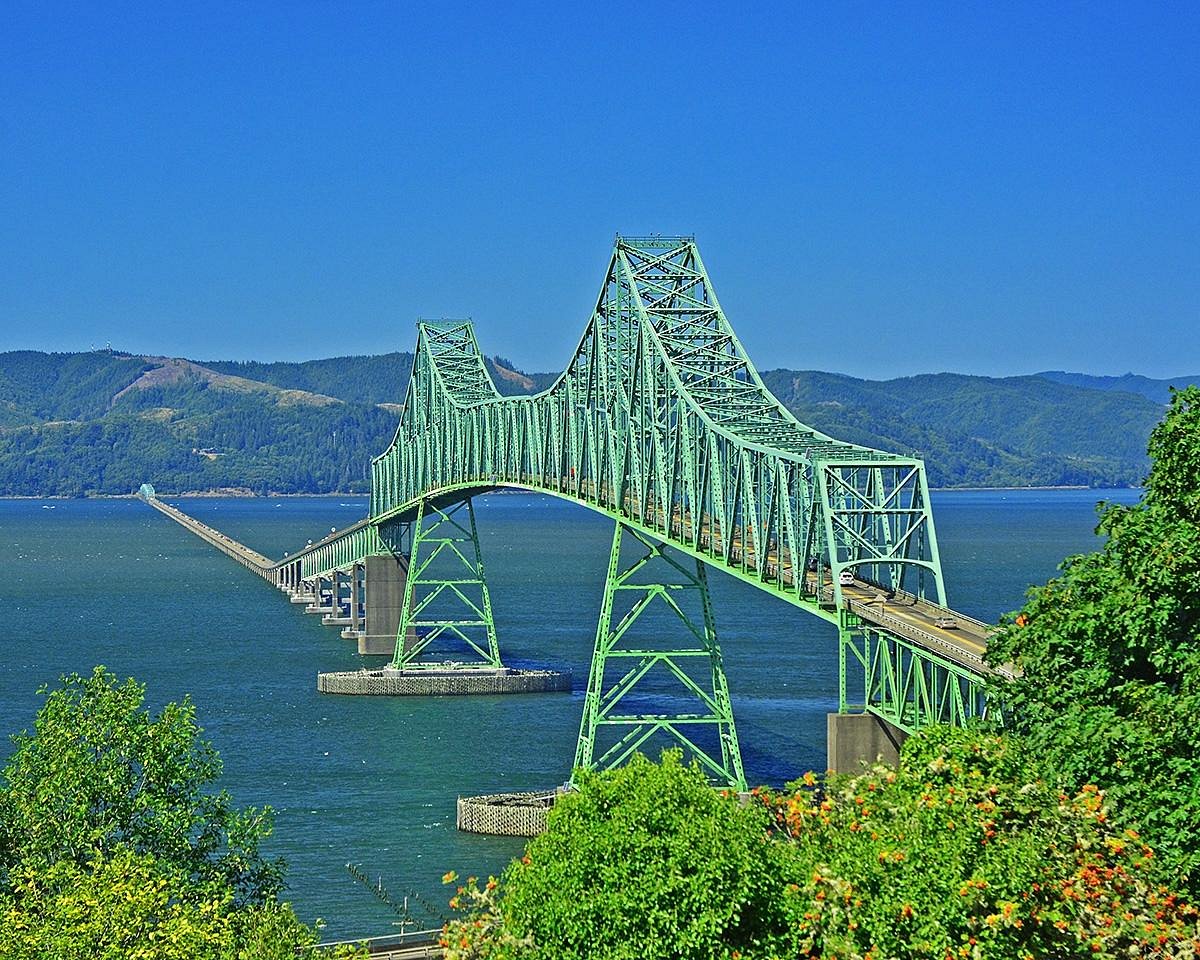
The construction of the bridge created a permanent highway connection between the two states along U.S. Route 101, a major highway running along the Pacific Coast. Engineers designed the bridge with a tall arch section near the Oregon side so that large ocean-going ships could safely pass beneath it.
Because the Columbia River is extremely wide near its mouth, building the bridge required careful engineering to support long spans over deep water. Today the bridge remains a major transportation link connecting coastal communities in Oregon and Washington.
4. Fort Stevens State Park
Fort Stevens State Park is a large coastal park located near Astoria at the mouth of the Columbia River. The park covers about 4,300 acres and includes beaches, forests, wetlands, and historic military structures.
The site originally served as a U.S. Army coastal defense fort beginning in 1863 during the American Civil War. Its purpose was to protect the entrance to the Columbia River, an important shipping route connecting inland regions of the Pacific Northwest with the Pacific Ocean.

During World War II, the fort became notable as the only military installation in the continental United States to be attacked by enemy forces. In 1942, a Japanese submarine fired shells toward the fort, although the attack caused little damage.
Today the park preserves several historic gun batteries and military buildings. It also includes one of Oregon’s most famous coastal landmarks—the rusted remains of the Peter Iredale, a ship that ran aground on the beach in 1906 and remains visible today.
5. Oregon Film Museum
The Oregon Film Museum is located in a historic building that once served as the Clatsop County Jail, constructed in 1914. The small brick structure operated as the county jail for many decades before closing in the late twentieth century. Afterward it was preserved and converted into a museum dedicated to the film industry in Oregon.
The building became widely recognized after appearing in the 1985 adventure film The Goonies. In the movie, the jail is shown in an early scene where the character Jake Fratelli escapes from prison. Because of this connection, the building became an important stop for fans of the film.

Oregon has served as a filming location for numerous movies and television productions. The state’s coastline, forests, and small towns provide varied natural landscapes that filmmakers often use as backdrops. The museum highlights this connection through exhibits about movies filmed throughout Oregon.
Displays include film props, costumes, production photographs, and interactive exhibits that explain how movies are made. The museum also documents Astoria’s role as a filming location for several well-known productions.
6. Astoria Riverfront Trolley
The Astoria Riverfront Trolley operates along the city’s waterfront using a section of historic railroad track beside the Columbia River. The trolley service began in 1999 as a heritage transportation project designed to preserve part of Astoria’s historic rail infrastructure.
The trolley itself is a restored 1913 streetcar that originally operated in San Antonio, Texas. After the car was retired from service there, it was eventually brought to Astoria and restored for use on the waterfront line.

The route runs along several miles of track beside the Astoria Riverwalk. This rail corridor was once used by freight trains serving the city’s fishing and shipping industries. Rail transport played a major role in Astoria’s economy during the late nineteenth and early twentieth centuries.
Today the trolley provides a slow-moving ride along the waterfront while explaining the city’s maritime and railroad history. Its bright red color and historic design have made it one of the most recognizable features along Astoria’s riverfront.
7. Astoria Riverwalk
The Astoria Riverwalk runs along the southern shore of the Columbia River and follows Astoria’s historic working waterfront. The path stretches for about 6 miles, connecting docks, parks, and historic industrial sites along the river.
Astoria developed as an important port during the nineteenth century because the Columbia River served as a major transportation route linking the Pacific Ocean with inland areas of Oregon and Washington. Fishing, shipping, and canning industries operated along the waterfront for many decades. Salmon canneries in particular played a major role in the city’s economy during the late 1800s and early 1900s.
Many buildings and piers along the Riverwalk stand on wooden pilings extending into the river. These structures reflect the city’s maritime history and the practical need to build directly over the water in a crowded port environment.
The Riverwalk also follows part of an old railroad line that once served the waterfront industries. Today the tracks are used by the Astoria Riverfront Trolley, which travels along sections of the route beside the walking path.
8. Flavel House Museum
The Flavel House Museum is a large Victorian mansion built in 1885 in Astoria. The house belonged to Captain George Flavel, one of the most successful river pilots on the Columbia River during the nineteenth century.
River pilots played a critical role in guiding ships through the dangerous waters near the mouth of the Columbia River. The shifting sandbars and strong currents made navigation extremely difficult for ships arriving from the Pacific Ocean. Skilled pilots such as Flavel boarded incoming vessels and directed them safely through the channel.

Captain Flavel became wealthy from this work and built the mansion as his family residence. The house reflects the Queen Anne style of architecture, which was popular in the United States during the late nineteenth century. The building features a tall tower, decorative woodwork, and large windows typical of the style.
Today the house operates as a museum managed by the Clatsop County Historical Society, preserving the history of Astoria’s maritime and residential life during the city’s economic peak.
9. Astoria Column
The Astoria Column stands on Coxcomb Hill, one of the highest points above the city of Astoria. The monument was completed in 1926 as a memorial to the early history of the Pacific Northwest. It rises about 125 feet above the hilltop and overlooks the Columbia River, the city below, and the nearby Pacific coastline.
The design of the column was inspired by ancient Roman victory columns such as Trajan’s Column in Rome. A long spiral mural wraps around the outside of the tower. The artwork illustrates major events in the exploration and settlement of the region, beginning with the arrival of European explorers and continuing through the nineteenth century.
Visitors can climb a 164-step spiral staircase inside the tower to reach an observation platform at the top. From this point it is possible to see the Columbia River flowing toward the Pacific Ocean and the forested hills surrounding Astoria.
The column was funded by the Great Northern Railway and local civic leaders as part of an effort to promote Astoria as a historic and scenic destination along the Oregon coast.
10. Columbia River Maritime Museum
The Columbia River Maritime Museum is located on Astoria’s waterfront along the Columbia River, one of the most important waterways in the Pacific Northwest. The museum opened in 1962 to preserve and explain the maritime history of the river and the surrounding coastal region.
The Columbia River connects the interior of the Pacific Northwest with the Pacific Ocean, making it a major route for trade and transportation. Ships carrying grain, timber, and other goods have traveled through the river system for more than a century.

The entrance to the river is known as the Columbia River Bar, a shifting area of sandbars and strong currents where the river meets the ocean. Because of its dangerous navigation conditions, the area has sometimes been called the “Graveyard of the Pacific.” Hundreds of ships have been damaged or wrecked in these waters.
Museum exhibits explain how mariners navigate these challenging conditions. Displays include navigation equipment, historic vessels, and a U.S. Coast Guard lifeboat used for rescue operations.
Through these exhibits, the museum illustrates how maritime activity shaped the economy and history of Astoria and the broader Pacific Northwest region.
Conclusion
Astoria, Oregon, is more than just a scenic stop along the Pacific—it’s a destination bursting with history, natural beauty, and small-town charm. Nestled where the Columbia River meets the ocean, Astoria offers an irresistible mix of activities, from exploring historical landmarks and hiking breathtaking trails to savoring local brews and discovering unique artwork.
This is a place that invites you to slow down, immerse yourself in its culture, and connect with its rich maritime heritage and creative energy. So, pack your bags, lace up your walking shoes, and get ready to experience the magic of Astoria. This coastal gem is ready to welcome you with open arms—and unforgettable memories.
Planning to visit? Karta has some amazing deals on Astoria Vacation Rentals for you.
Best Places to Eat in Astoria, Oregon
| Restaurant | Location | Cuisine | Why It's Popular | Average Price Per Person | Must-Try Dish | Best Time to Visit |
|---|---|---|---|---|---|---|
| Bridgewater Bistro | Downtown Astoria | Pacific Northwest / Seafood | Waterfront restaurant with views of the Columbia River | $25 – $50 | Dungeness crab mac & cheese | Dinner |
| Buoy Beer Company | Riverfront Astoria | Brewpub / Seafood | Local brewery famous for beer and riverfront dining | $15 – $30 | Fish and chips | Lunch or dinner |
| Fort George Brewery + Public House | Downtown Astoria | Brewpub / American | Popular craft brewery with rooftop seating | $15 – $35 | Wood-fired pizza | Evening |
| Coffee Girl | Astoria Riverwalk | Cafe | Historic cannery building with scenic river views | $8 – $15 | Breakfast burrito | Breakfast |
| Bowpicker Fish & Chips | Downtown Astoria | Seafood | Iconic food stand inside a converted boat | $10 – $15 | Albacore tuna fish & chips | Lunch |
| South Bay Wild Fish House | Downtown Astoria | Sustainable Seafood | Known for fresh, locally sourced seafood | $15 – $30 | Grilled salmon sandwich | Lunch |
| Carruthers Restaurant | Downtown Astoria | American / Fine Dining | Upscale restaurant known for creative Pacific Northwest cuisine | $30 – $60 | Pan-seared scallops | Dinner |
| The Astoria Brewing Company | Riverwalk | Brewpub | Classic brewery with river views | $15 – $30 | Clam chowder | Lunch |
Day Trips From Astoria, Oregon
| Destination | Distance From Astoria | Travel Time | Main Attractions | Top Activities | Estimated Cost | Best For | Transportation |
|---|---|---|---|---|---|---|---|
| Cannon Beach | 42 km / 26 miles | 40 minutes | Haystack Rock and scenic coastline | Beach walks, tide pools, photography | $10 – $60 | Beach lovers | Car |
| Seaside, Oregon | 27 km / 17 miles | 25 minutes | Classic Oregon beach town | Boardwalk strolls, shopping, beach activities | $20 – $80 | Families | Car |
| Ecola State Park | 48 km / 30 miles | 45 minutes | Dramatic coastal viewpoints | Hiking, whale watching, photography | $5 – $20 | Nature lovers | Car |
| Cape Disappointment State Park | 37 km / 23 miles | 35 minutes | Lighthouses and coastal cliffs | Hiking, lighthouse tours, beach walks | $10 – $30 | Outdoor explorers | Car |
| Portland, Oregon | 155 km / 96 miles | 2 hours | Major Pacific Northwest city | Museums, restaurants, shopping | $30 – $150 | Urban exploration | Car |
| Long Beach, Washington | 32 km / 20 miles | 30 minutes | One of the longest beaches in the U.S. | Beach driving, kite flying | $10 – $40 | Relaxing coastal trip | Car |
Best Time to Visit Astoria, Oregon
| Season | Months | Weather Conditions | Average Temperature | Crowd Levels | Events & Highlights | Pros | Cons |
|---|---|---|---|---|---|---|---|
| Spring | March – May | Mild with blooming coastal scenery | 9°C – 16°C (48°F – 61°F) | Moderate | Astoria Warrenton Crab & Seafood Festival | Fewer crowds | Rain possible |
| Summer | June – August | Pleasant coastal weather | 13°C – 20°C (55°F – 68°F) | High | Astoria Regatta Festival | Best weather for outdoor activities | Peak tourist season |
| Fall | September – November | Cool with scenic coastal fog | 10°C – 18°C (50°F – 65°F) | Moderate | Fall festivals and seafood season | Beautiful scenery | Rain increases later in season |
| Winter | December – February | Cool and rainy | 5°C – 10°C (41°F – 50°F) | Low | Storm watching season | Quiet travel period | Frequent rain |
How to Get Around in Astoria, Oregon
| Transportation Type | Description | Average Cost | Availability | Advantages | Disadvantages | Best For |
|---|---|---|---|---|---|---|
| Car Rental | Best option for exploring the Oregon Coast | $45 – $100 per day | High | Freedom to visit nearby beaches and parks | Parking in busy areas | Day trips |
| Taxi / Ride Share | Limited Uber and taxi availability | $10 – $30 | Moderate | Convenient for short trips | Limited supply | Local travel |
| Sunset Empire Transportation Bus | Regional public bus system | $1 – $3 | Moderate | Affordable | Limited routes | Budget travelers |
| Bicycles | Bike-friendly riverwalk paths | $15 – $40 rental | Moderate | Scenic and eco-friendly | Weather dependent | Riverwalk exploration |
| Walking | Downtown Astoria is compact and walkable | Free | Very high | Best for sightseeing and shops | Hilly terrain | Short distances |
FAQs
1. How far is Astoria, Oregon, from Portland?
Astoria is located about 97 miles northwest of Portland, and it takes approximately two hours to drive there via Highway 26 and Highway 101.
2. What is Astoria, Oregon, known for?
Astoria is best known for its rich maritime history, its role in the Lewis and Clark Expedition, and its scenic location where the Columbia River meets the Pacific Ocean. It's also famous for being the filming location for the 1985 cult classic The Goonies.
3. Is Astoria, Oregon, worth visiting?
Absolutely! Astoria offers a unique blend of history, outdoor activities, and cultural experiences. From exploring historic landmarks like the Astoria Column and Fort Stevens to enjoying local breweries and scenic riverfront views, there’s something for everyone.
4. When is the best time to visit Astoria, Oregon?
The best time to visit Astoria is from May to September when the weather is mild, perfect for outdoor activities like hiking, beachcombing, and exploring local landmarks. Summers tend to be cooler than other parts of Oregon, making it a great escape.
5. Can you visit the Goonies House in Astoria?
While the Goonies House is a private residence, you can drive by and take photos from a respectful distance. Fans of the movie can still enjoy the scenic drive and see other filming locations around town.
6. What are some must-see attractions in Astoria, Oregon?
Some must-see attractions include the Astoria Column, the Columbia River Maritime Museum, Fort Stevens State Park, and the Flavel House Museum. Don’t forget to take a ride on the Astoria Riverfront Trolley!
7. Are there good hiking trails near Astoria?
Yes! Some of the best hiking spots include Saddle Mountain, offering sweeping views of the Pacific Ocean and the Cascade Range, as well as the trails at Fort Stevens State Park and the Lewis and Clark National Historical Park.
8. What is there to do in Astoria on a rainy day?
Astoria has plenty to offer on a rainy day. You can visit indoor attractions like the Columbia River Maritime Museum, explore local art galleries, or enjoy a cozy afternoon at one of the town’s breweries like Fort George Brewery or Buoy Beer Company.